The QueenPrincess Says...
  • The QueenPrincess Says...
  • About
  • Other Stuff You Want to Be Reading...

A Good Medicine

6/26/2015

 
Picture
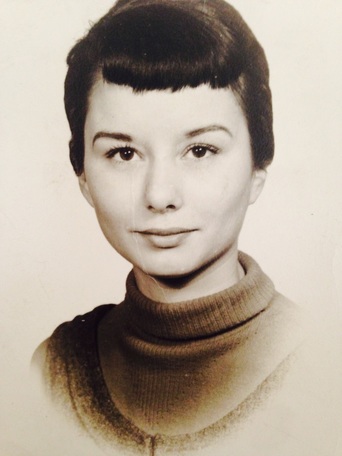
My beautiful mother. I'm guessing, 1956 or 57.
Six year ago today, my mother died. 

I was at my sister’s house, in Connecticut.  I was on the phone with my niece, back in Michigan, who happened to be driving by my parent’s house at that very moment and noticed an ambulance in the driveway.  My parents were not the most “well” people so the possibility of death didn’t really occur to me – to either of us, I think, right away.  I think we both thought one of my parents was just being taken to the hospital for some reason.  Hospitalizations were not all that uncommon for them.  The details after this moment get hazy in my memory.  I think, my niece told me she would go check things out and call me back.  And… I think, it was my niece who called me back to tell me the news.  And… I don’t even remember whether I said goodbye to her or not before I put the phone down. 

Like a lot of monumentally important life experiences that we all (or most of us) go through, finding out your mother has died feels both exactly what you expected it to feel like and then nothing at all like what you expected.  I remember a physiological response – my heart racing, feeling hot all over and a bit dizzy – as if I’d been punched really hard in the gut.  I remember a swimming feeling in my head. So many thoughts swirling so fast. I remember saying, out loud, “I’m sorry.” “I’m sorry.” “I’m sorry.”

I said “I’m sorry” over and over because I had made the choice not to speak to my mother or see her about three years before.  And this, Dear Reader, was the stupidest thing I have ever done.  And, honestly, that is really saying something considering the very many outrageously stupid things I have done in my life. 

I suppose there are mothers out there who have done things so unforgivable that their children are justified in turning their backs on them.  My mother was not one of these mothers.  Not by a long shot. The complicated choice I made to not speak to her was not made easily and it certainly felt justifiable at the time but now, in retrospect, was obviously short-sighted and immature and probably quite cruel.  Definitely.  Quite cruel.

And in that moment, of finding out she was gone, all at once, everything was gone.  There would never be reconciliation.  There would never be another chance to say I’m sorry to anyone who could actually forgive me.  There would never be another hug from her, another smile, another card written in her gorgeous handwriting. The finality of death is impossible to grasp until it grasps you, hard and unforgiving, by the throat. 

The next day or two was a fumble of getting back to Michigan and seeing my father (the reason I stopped talking to my mother) and going through her things and getting everything ready for her wake. Somewhere in that fumble, there were conversations and even mild arguments about how she should be dressed, what she should “wear” to her own funeral.  This argument, this conversation about how she should be dressed felt precious to me, felt important.  What a senseless consideration, on one hand.  How on earth did it matter? And yet, how intensely important, how telling of how well we knew her or did not know her, to know what she’d like to be dressed in.  I can’t fully explain it.  This question felt like a little star in my head, like a little pinprick in my heart.  It needed attention.

So, I declared June 26th Dress Day.  Every June 26th, I buy a nice dress that, should I die that particular year, my famiy knows THAT’S the dress I want to be buried in.  Completely sick, right?  Morbid? Perhaps.  But, it feels so abundantly necessary to me.  And, I’m not sure I can articulate why exactly.

It felt sad to me, I guess, that we spent so much time and energy talking about what my mother should wear to her funeral.  I wanted to talk about HER.  I wanted to lie on her bed and snuggle her teddy bears.  I wanted us all to be holding each other and crying on each other’s shoulders and talking, talking, talking deeply, meaningfully.  I didn’t want to talk about her clothes.

It also felt sad to me that my mother had the exact same clothes in her closet that she was wearing three years before.  Dresses that she had worn for ten or fifteen years.  Lots of everyday things.  Nothing super snazzy. Nothing particularly elegant.  Nothing fancy.  I know my mother liked fancy.  She made due with everyday because that’s what she had to make due with.  But, she enjoyed fancy quite a bit.  And here was her closet – with no fancy in it.  She deserved fancy – a least a little.  We all do. 

So, Dress Day isn’t just about buying the dress I want to be buried in.  Indeed, it’s not at all about that truly – because the Universe and I have a deal about me living an incredibly long life so I know the next fifty or so dresses are just practice runs.  Dress Day is about honoring my desire and my mother’s desire for fancy. 

Here’s what I wish.  I wish that every year on my Mother’s birthday, I would’ve taken her shopping for a beautiful, frivolously expensive dress that made her feel gorgeous and fancy.  We would’ve spent the day walking in and out of stores and talking.  We would’ve stopped for lunch at some point and maybe some chocolate in the afternoon.  It would’ve been a lovely day.  And she would’ve gone home with a little piece of fancy that was all hers.  To wear to fancy luncheons.  To wear on fancy date nights.  To wear while she cooked and cleaned the house, if she just wanted to feel fancy that day.  We both would’ve looked forward all year to this day.  Dress Day.

Instead, my Dress Day is a way to spend the day with my mother while she’s no longer physically with me.  Of course, I think about my mother often.  And, I feel she is with me often.  But on Dress Day, I have permission to hold her especially close, to take time feeling the influence she’s had on my life, my thoughts, my beliefs, my being. I make sure to take a lot of time to thank her.  So far, I’ve spent every Dress Day, but the first, physically alone.  I think that is as it should be because then, it’s just me and  Ramona.

When I declared Dress Day, at the Villa in Frankfort, where my family gathered to drink and eat – but mostly drink – after my mother’s funeral, one of our dear family friend’s disapproved strongly of this idea. Here’s some advice, Dear Reader:  please let people grieve however they want to grieve, as long as it’s no skin off of your back.  I mean, if someone’s version of grieving is directly HURTING you, then, perhaps you should disapprove.  Otherwise, please keep your opinions firmly to yourself. 

Everyone needs to grieve in their own way, in their own time.  And speaking of time, Almost NOTHING is more offensive than telling someone who is grieving a deep loss that it’s time to “get over it.” Or to ask them if they are “over it yet”? I made the mistake of once asking a friend who had lost their father two years before how long it took him to “get over it”? I asked this about eight months after my mother died when every day still felt sad and hard and I couldn’t imagine continuing to feel like that forever.  He said, thankfully, “I don’t think you ever ‘get over it’.” He was right.  The constant sadness goes away.  But… the deepness of the sadness never does.  It’s always right there.  When my mother comes to my mind, the intensity of the sadness is always the same—always the same as when I got the phone call that she was gone. If I give myself a moment to really feel it, it is breathtaking – as in, it literally takes my breath away. 

I don’t think it’s healthy to pretend that I don’t feel this.  Or, when these feelings come, to push them away completely.  Sure, there have been times that they come up at inconvenient times and I have to turn my mind away from them – while I’m teaching, at a joyous occasion with my kids, in a work meeting – but I know I have to let myself feel it or else that pain, that grief turns into behavior – like compulsive overeating and self-pity – that I would very much rather avoid. 

Dress Day is a salve, not a cure, but a good medicine for the pain of having lost my mother.  I hope that everyone who has lost – especially mothers and fathers – has found their own method, their own system or ongoing event to honor their loved ones and their own grief.  Nothing makes it all better.  But, honoring our loss and feelings, does help. 

Namaste.
Happy Dress Day!
& Vaya Con Dios, says Ramona. 

-The QP

p.s. If you happen to be someone who is as stupid as I was (and, let’s face it, probably still am) and you are not speaking to someone who is incredibly important to you, please reconsider your decision.  Please spend some time deeply considering whether you want to hold onto your hate or your hurt badly enough to feel as much regret as I promise you WILL feel if you lose this person before you have a chance to reconcile.  Then, if you decide it’s not worth it, start making things better TODAY.  Not tomorrow.  Today.  Every day that person is here, in this world, is a gift to you.  Every day you are here is a gift.  And, maybe you’ll decide it IS worth holding on to your hate and your hurt.  If so, I hope you are right. And I hope you have some really good angels to see you through because whether you are right or wrong, there is great pain, I know. Namaste.
In Case You Wanted to Know

6/25/2015

 
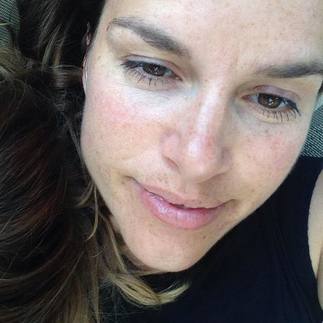
PictureTook this while floating in my sister's hammock in her gorgeously redecorated back yard. I love my sister. I love her hammock. I love sunlight and the way it drips through the trees like bright icing. And, I love, I love, I love, I love summer.
I started to post every day there for a little while -- maybe three days in a row -- about a week and a half back... 

[Tonight, I posted twice -- this will be thrice! -- mostly because I have insomnia and I'm supposed to go running at 5am and if I don't show up, I might upset my running buddy and it's now 2:30am and oh no! what am I doing?

My only fitness goal this week was to sleep for at least 7 hours every night.  If you don't think decent sleep is a good fitness goal, you need to start researching the health benefits of good, regular sleep. But that reminds me of why I'm posting this.]

 ...In my daily posting about a week and a half ago, I was pretty open about feeling some pretty big down-ness.  And, I was thinking today, it's weird, this blog thing... maybe there are some people out there reading this who really don't know and who really might want to know that the down-ness has turned to mostly up-ness now.  Maybe somebody out there would like the next, not-necessarily-obvious, update that all is pretty much well.  Well, Dear Reader, should you be the one who would like to know:  all is pretty much well.

Granted, some pretty wonderful things have occurred in recent days.  I was present at the birth of my grand-nephew! A child born to a child I held in my arms when she was just about eight days old! Whoah! I got to celebrate with one of my other amazingly wonderful nieces who just graduated from high school and is moving on to the next phase of her life -- college! -- and I held her when she was just THREE HOURS OLD and now she's an all-grown-up young woman and --- whoah! And one of my awesome nephews just welcomed his third child into this world! And the weekend of the graduation I was able to see many beloved family members who live far away and out of reach, including my oldest brother, my sister, three MORE nieces and two sisters-in-law! And my Spring semester of a lot of comp teaching is coming to a grinding halt and Phew! not a moment too soon.  The kids are out of school and already tanned/burnt and freckled. When I let my hand drift over the wind rushing by my driver's side window, it feels thick and warm and soft. We are swimming outside. Oh, thank every god, it's summer!

So sometimes it's easy to be happy. Sometimes it's easy to be grateful. And these are the times that we should wrap in tissue paper and carefully close inside a small box and place inside the hope chest of our hearts for those other times. So, that's what I'm doing. In case you wanted to know.

Namaste,
The QP

Worry Is Not the Same as Love

6/25/2015

 
Picture
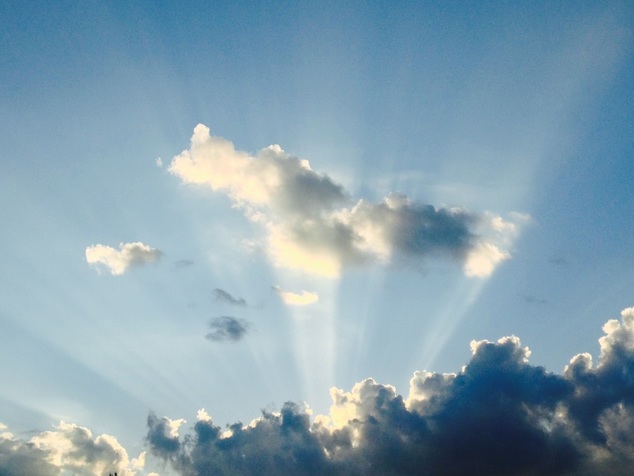
while I was working on this post, this lovely sight appeared above the public pool where my kiddos and I like to swim in our mermaid tails -- and I thought, yup, "confidence"
In the summer of 1995, I called my mother from a pay phone in San Francisco, babbling excitedly about redwoods and hostels and bridges and ducks hung in the windows of Chinatown restaurants.  I was halfway through a cross-country road trip with my then-husband and his younger brother.  I had never been so far away from Michigan, both physically and mentally.  My world had expanded exponentially with every mile we travelled, every state-border that my companions and I crossed.  By the time I was talking to my mother at this pay phone, my mind was officially blown and I’m sure I sounded manic and wild.  This was my mother’s first and chief response:  “San Francisco!? Oh my god! You’d better get out of there! What if there’s an earthquake?”

My mother was the original queen of negative “What Ifs.”  “What if there’s a tornado?” “What if it rains?” “What if you rip your dress?” “What if you fall?” “What if you things don’t work out?”

If the above story demonstrates my mother’s inability to validate my feelings of excitement or be proud of her daughter with the adventurous spirit, it should also demonstrate one of her other most powerful habits:  Worry.  My mother was a twenty-time world-champion worrier.  I saw evidence of her worrying about my siblings and her grandchildren throughout my childhood but I FELT her worry on me constantly, like she had a second set of eyes that followed me everywhere.  Creepy.

But I didn’t know that it was creepy then.  I didn’t even know what it was.  In fact, the first time I was ever aware of my mother’s worry as a response to my excitement being problematic, I was standing at that pay phone in San Francisco.  I felt let-down in her response but I wasn’t sure why.  That was just my mom, making sure I was okay, as usual.  And then, I walked away from the phone and couldn’t wait to get out of San Francisco.

My mother worried about me.  Of course, she worried about all of her children.  But one of the major ironies of our relationship was that, though my mother was full of worry, she called ME a “worry-wart.”  She harped on me not to worry constantly.  Yet, if I complained of a headache, she asked the doctors she worked for to order an EEG (I had four or five EEGs before I was 14).  If I had the sniffles, I stayed home from school and was ordered to sleep on the couch all day; I was fed Campbell’s Chicken Noodle Soup and Saltines and Vernor’s Ginger Ale.  If there was rumor of a severe storm, we spent the entire night in our basement. Hiking was dangerous because of loose rocks and bugs.  Swimming was dangerous because of undertows and waves.  Piers were dangerous.  Travel was dangerous.  Boys, of course, were dangerous because just looking at them could make a girl pregnant.  Bras were dangerous because they meant girls were slutty (I never did figure this one out).  Wearing miniskirts was SO dangerous, I would be all but dishonored and shunned from the family for doing so.

Obvious to me now, is the fact that MY worry grew from my mother’s worry.  I learned to worry hard from my mother.  And she was right, I became a worrier, though I’d rather not call myself a “wart” of any kind.  I am often still a deep, troubled worrier.  I am a disciple of the negative “What Ifs.”  My husband and I frequently have the following exchange.

Me:  “What if… (something bad)?”

Him:  “What if… (something good)?”

It’s a losing battle because neither of us can predict the future, dammit.  And, yes, I know, it’s better to be optimistic and expect the best.  He does this without trying.  I try.  Every day, I have to try. 

We all know optimism is superior to pessimism if one’s aim is to be happy.  None of us can predict the future so… best to expect the best.  But just telling someone who worries – deeply, madly and truly worries – to “Don’t Worry, Be Happy” is not especially helpful.  This is the main advice my mother gave me, “Stop worrying!” But if it was that easy, like flipping a switch, then I would never have started to worry in the first place. 

I recently read a book called “Chakras for Beginners” by David Pond [oh, don’t act so surprised Dear Reader who thinks such books are hooey weirdo drivel – I found it wildly interesting].  I have been casually practicing yoga for over 20 years so I’ve heard the concept of chakras thrown around quite a bit by a wide range of instructors in a variety of ways and I thought it was time I finally understood what the hell these people were talking about.  In this book, Pond offered some advice about worry that I could finally wrap my head around that finally helped. 

Pond (more or less) says to imagine the color of worry.  Imagine what worry would sound like if it were a kind of music.  What quality of light worry would be.  Then, imagine yourself with a gallon of paint that is the exact color of worry in front of a blank canvas.  Imagine you are listening to the music of worry and working under the light of worry and you are painting this canvas with the color of worry.  You are painting a picture for the person you are worried about.  You paint them a picture of your worry.  When it is done and dry and ready to give, you wrap it up, put a big bow on it, and send it to your friend, whom you are so worried about, with a note that says: “Here is a picture just for you.  It’s what I think of when I think of you.  Please hang it in your home where you can see it everyday and you can feel what I feel when I think of you.” 

No one would want that picture.  The smartest friends would refuse to accept such a “gift.”  And yet, the point of the story is, when we worry about someone, the only thing we are giving them is yuck.  We are pointing a whole shit-ton of negative energy right in their direction, beaming it at them with the opposite of light. 

I read this passage from Pond’s lovely little book for the first time while two people that I love dearly each began going through the Divorce process.  I was worried about them.  I was deeply worried most days.  The moment I read this passage, my worry for them changed.  I knew I couldn’t send them that negative energy so I replaced it with positive thoughts of the life of freedom they both have ahead of them.  But it still took me a couple of weeks before I fully understood what I could replace my worry with, specifically.

And this understanding happened with my daughter.  I worry about my children – just as my mother worried about me – ALL THE TIME.  Worrying about your children is part of loving them, right?  It’s natural.  It’s necessary.  It’s what keeps them safe – isn’t it? While both of my children give me plenty of cause to worry, it is my daughter that causes me to worry for her physically every single day.  She is a daredevil; a fearless daredevil.  She bounces everywhere she goes, like tiggr.  If she’s not bouncing, she’s dancing on some edge (literally, if not figuratively) or she’s running or she’s climbing on things.  She has ALWAYS been like this.  She went to the emergency room for this kind of behavior twice before she was two.  She hit her head so many times as a very young child that I seriously considered making her wear a helmet at all times.  It was obvious from a ridiculously young age that she loved all types of athletic activities.  She wants to play every sport.  The more dangerous, the better. 

One night, recently, I suggested that we go for a family bike ride on a new (to us) trail.  Halfway through the ride, I remembered that there were hills on this new trail.  We live in the flattest part of the lower peninsula of Michigan which is already almost as flat as Ohio or Kansas.  Flat.  So, “hills” are weird and (to me) scary.  My daughter has only been riding without her training wheels for a few months.  She recently graduated to a bigger bike with a hand-brake for the first time.  I wasn’t worried about her going up the hills but as I imagined her going down the hills, my mind painted a picture of her spinning out of control, hitting the brakes too hard, running off the trail, falling ass-over-teakettle and basically, splitting her head open.  In my picture, this lovely, sunny family bike ride turned into the worst night of our small family’s life.  And I caught myself spiraling down into worry so deeply that my entire mood was shifting.  In this moment, I told myself to paint a different picture.  “What’s the opposite of worry?” I asked myself.  I forced myself to see my daughter flying down that hill at top speed with a smile on her face and in total control of her bike.  I forced myself to see her face and posture filled with the thrill of doing something so daring on her own and the confidence doing that daring thing would give her.  And that’s when I realized that “confidence” is the opposite of “worry.” 

Consider the color of confidence, the music of confidence, the sound of confidence.  Consider painting a picture of your confidence in someone and giving that someone your painting to hang in their home. Imagine saying to someone, “this is the picture I see when I think of you.”  Wouldn’t this picture make them feel so much… brighter? happier? more optimistic? capable? energized? excited about the future?

My mother was a wonderful woman and a kind and caring and affectionate mother.  Like most mothers, she did the best she could do.  But if she ever had this kind of confidence in me – or anyone else for that matter – I never knew it.  And maybe she did but she didn’t know how to articulate it.  Maybe she wanted to feel total confidence but was raised to feel that worry was somehow more authentically loving. But, it’s not.

I am a recovering worrier now. It will take some time to make replacing worry with confidence a habit.  But last weekend, I got two chances to practice this new habit.

The first was being present at the birth of my grand-nephew.  During the entire “normal” parts of the birth, there was not a moment where I felt worried.  I had an over-2-hour drive to the hospital where my niece was in labor.  On the way there, I talked loudly and clearly to myself, the universe and my family’s personal angels about what a great, positive birth this was going to be for my niece, about how I would have the strength and the wisdom and the courage to help my niece through this momentous event. By the time I got there, I was ready. I NEVER worried.  I had nothing but confidence in my niece, her husband, myself, the Universe, the baby and my family’s angels.  When the doctor and the nurse started to talk in concerned tones about my niece’s high blood pressure, I was tempted to worry for half a second.  I was so tempted to worry.  My painting of worry for my niece started to emerge in my minds-eye and immediately, I shook it away – as easily as an etch-a-sketch – and I replaced that painting with an image of confidence.   Pure confidence.  When she said, “I CAN’T do this,” I said, with ABSOLUTE confidence, “YES, you can.”  And she did!

The truth is, of course, I had nothing at all to do with her actually being able to do it. BUT, I feel strongly that if I had allowed fear and worry and doubt to grip my heart the way it wanted to in that moment, I might have hindered her ability to do it for a short while or I might have made her birth experience much less pleasant and I certainly would have been an enormous hindrance to her husband. 

Just like, when my daughter is doing something I deem “wild” or “crazy” and she looks at me with this huge smile and I’m scowling and I can only envision her split-open head or cut-open leg or a trip to the emergency room.  I hinder her.  I make whatever she is doing less pleasant.  I let her down.  I don’t validate her feelings of excitement.  I’m caught in my own journey of fear.  I completely miss her journey of discovery. 

The second time I was able to practice my new habit last weekend was at my sister’s house. I started to feel gripped by my need to worry and fear for my sister and for her daughter who was graduating from high school.  Though absolutely joyous, this rite of passage was complicated slightly by my sister’s very recent divorce.  I felt the urge to worry about their ability to handle the whole thing.  And once again, I forced myself to paint a different picture.  Total confidence in their strength, their wisdom, their knowledge of themselves, their separate abilities to handle, basically, anything.  After all, they are Stevenson girls and come from a long long line of badasses.  And, again, though my attitude of confidence-instead-of-worry didn’t really make it possible for them to handle everything, at least it didn’t hinder their utterly graceful badassery.

My ability to replace worry with confidence is a life-altering discovery. I believe this discovery will continue to extend into the life of my family in a thousand positive ways.  Just this week, I replaced my worry about my son joining his first full-day summer camp with confidence that he’d be able to make friends, enjoy himself, be open to new experiences (all things he struggles with).  He still hated camp.  So again, I replaced my worry that we weren’t going to find a solution to this problem with confidence that we could, that he could help me figure out what would make him happy but also fit our needs of having him out of the house so that we can do our jobs.  And we did.

It’s hard to let go of worry.  Even though the nature of this memoir-esque blog probably makes me seem completely self-involved and self-obsessed, the truth is, like a lot of women, my whole life seems to revolve around caring for others.  I care for my children, of course.  But, to some degree, I care for my partner as well (though he does more than his fair share of caring for me back).  My job requires me to care for my students (and I probably go well beyond the job description in this department) and often my co-workers as well. I have a relatively large extended family that I care for deeply – though I don’t often reach out to them on a daily basis, I think of them more often than most of them realize.  The same is true for my widely dispersed network of friends – people I adore – people I don’t see nearly enough but whom I adore just the same.  Altogether – from my own small family to my extended family to my friends, to the basic requirements of my work – that’s A LOT of people to worry about.  I’ve sent out a whole lot of ugly pictures over the years. 

When I imagine what a painting of confidence would look like, I just imagine a bright sun in a beautiful sky.  These days, when a friend tells me she’s having a particularly rough time, instead of picking up the paintbrush of worry, I imagine a huge canvas filled with a gloriously bright sun in a beautiful sky.  I think, “She’s going to be just fine.  I have total confidence in her that she can do this, she can make it through this. She has all the smarts and strength and awesomeness she needs to figure this out.” Instead of being the little black cloud full of worry, ready to rain on my friend at any moment, this picture of confidence helps me be a kind of cheerleader instead.

Paint your pictures and cheer your cheers with love, y’all.

& Namaste

-The QP

Against The "F" Word

6/25/2015

 
Picture
Let me be clear, I’m not against the word “Fat” as a nutritional or clinical term. 

Nutritionally, Fat is a macronutrient.  It carries 9 calories per gram (unlike the other two macronutrients, Carbohydrates & Protein that only carry 4 calories per gram).  This makes it a powerhouse as an energy source because it is calorie-dense which, of course, is also why we don’t want to eat too much of it.  Fat digests slowly which means, if you eat enough of it, it helps you feel sated and sustained throughout the day.   But if you eat too much of it, it will make you feel bloated, gassy, constipated and sluggish.  It is recommended (by the USDA) that we keep our fat intake within 20-35% of total daily calories (if we are eating around the average necessary 2000 calories each day).  It is also recommended that we NEVER eat Trans Fats (hydrogenated oils) because they are as disease-causing as cigarettes and because consumption of them encourages obesity.  It is also recommended that we eat as little saturated fat (animal fats) as possible.  The majority of our fats, if we are concerned about longevity and overall health, should come from unsaturated fats (plant fats).  And there you have it.  Fat, as a nutrient, isn’t a “bad guy” – he’s just a guy we need to know some things about, like the other guys Carbohydrates & Proteins.

Clinically (medically or physiologically) we require some fat on our bodies to insulate us, protect us, and allow our body to function on a cellular level.  Zero percent body fat is death.  Literally.  Men need to carry AT LEAST 3-5% body fat to stay healthy.  And, women need to carry AT LEAST 12-15% body fat to stay healthy.  Though healthy body fat ranges (depending on age) can go up to 22% for men and 27% for women. Having a higher body fat percentage than the designated “healthy” range does not make you a bad person or an ugly person – it just means your body fat percentage isn’t healthy.  That’s all.  If you are concerned about longevity and overall health, should you pay attention to a less-than-healthy body fat percentage? Sure! Of course! And to pay attention to it, you should probably start doing some form of strength training, moderate cardiorespiratory exercise and watching your food intake more carefully.  And then, your body fat percentage will decrease or increase.  And it really is that simple. 

What makes it not simple is the psychological / emotionalpart.  And the connotations we have placed upon the word Fat are evidence of this.  What do we mean when we call a person “Fat”?  Do we mean that they are clinically overweight and, if they are concerned about their longevity and overall health, they should perhaps do something about it? Maybe.  If you are a licensed personal trainer, group fitness instructor, doctor, nurse, physical therapist – you may be able to SOME DEGREE look at someone and say whether their body weight is unhealthy and you might genuinely be concerned about their health.  But, I’m willing to bet pretty big money on the fact that when most of us call someone “Fat” in MOST situations, it has nothing at all to do with their health or our concern for their health. 

“Fat” means much more, in our culture, than “clinically overweight.”  It means “ugly,” “stupid,” “lazy,” “unmotivated,” “worthless,” “horrible,” “disgusting” and probably a handful of other negative things.  These are the meanings we have given to that word.  And most of us are aware – even if we have to stop and think about it for a second -- that these are the meanings we’ve given to that word.  When someone claims that they are using that word “clinically,” that’s bullshit – because it’s not a clinical term for the overall state of someone’s body. 

The bottom line in our culture is that “Fat” is a mean thing to call someone… especially yourself. 

One of the meanest things I’ve ever done in my life – I mean, straight up consciously mean – was, as a teenager, warned my friends before they met my mom that she was “Fat.”  I used that word specifically.  I was ashamed of my mother’s weight and I was terrified by it.  Whether it was my mother’s teaching or my father’s teaching or our culture’s teaching, or a combination of the three, I learned early on that extra weight meant “Fat” and “Fat” meant all of those negative words above.  Of course, I didn’t think of my mother as “worthless” – no one on earth has ever meant more to me or was more necessary to me than my mother – but I know I thought her extra weight meant that she was ugly and that she was probably a little stupid and that she was definitely lazy and probably even a bit disgusting (please forgive me, I was a typically HORRIBLE teenager).  And it took me a long time to realize that the people we call “Fat” in our culture are almost never any of those things.  What they are, often, is desperate – DESPERATE -- to not be “Fat” (with all it’s many connotations). 

But the more our culture calls someone “Fat,” the more they call themselves “Fat” and the more someone believes that they are “Fat” the less success they are going to have in reaching a healthy bodyweight.  Because you can’t – YOU CAN’T – achieve lasting weight loss (or gain) and a healthy bodyweight  by constantly telling yourself and hearing from others that you are “ugly,” “stupid,” “lazy,” unmotivated,” “worthless,” “horrible,” or “disgusting.”  You can call yourself all of those horrible names and force yourself into submission for a short time to lose (or gain) SOME weight but if you keep calling yourself those names, and keep approaching your body weight as a measure of your worth as a human being, it will not last.  You have to stop calling yourself “Fat.”  That’s the first thing you have to do.  “Fat” is the evilest word of all because it rolls all those other evil words you want to use on yourself (or other people) into one big devastating word.  “Fat” works like an atom bomb on your self-esteem. 

When you stop using “Fat” to destroy yourself, you can begin to separate your body weight, which is only one TINY TINY TINY component of who you are from all of those other aspects of who you are.  You can say to yourself, “I have a high body fat percentage” but I have a gorgeous smile, a sexy ass, a great career and I can sing like an angel (or whatever).  My mother was beautiful – I mean BEAUTIFUL – she had gorgeous, youthful skin and a smile… well… a simply dazzling smile.  She was an awesome dancer. And she was one of the funniest people I’ve ever known.  And her laugh was remarkable and infectious.  If she had learned to stop calling herself “Fat” and all the other horrific names she used to call herself, she might have been able to see these wonderful traits in herself and she might have been able to find confidence in herself and she might have been able to teach me to do all of that too.  She would have seen her weight as only one part of her and not as THE thing that made her a simply worthless human being. 

Using the “F” word on someone is negating their meaning as a human being.  It’s not nice.  We know this.  This is why one of the meanest things one woman ever calls another is, “Fat Bitch.” Blech.  It sends chills up my spine when I type it.  When a woman calls another woman a “Fat Bitch” you know there’s no chance of reconciliation between those two women.  You know there is true hatred there.  Many of the other mean names women call each other (“Cunt,” “Bitch,” “Whore”) have some basis in specifics and have some power behind them.  If a woman is a “Cunt” or a “Bitch” she’s likely very powerful and in control and gets what she wants.  If a woman is called a “Whore,” it’s either because she’s highly attractive to people and/or she’s promiscuous.  Either way, again, there is a certain power, a certain (albeit twisted) “goodness” about her.  None of these words are “nice” of course.  No one WANTS to be called any of these things.* But when you call someone a “Fat Bitch” there is not a single redeeming quality about them.  No one wants them.  No one wants to be around them.  They are ineffectual.  They are worthless.  It’s just a horrible horrible horrible thing to call another human being.  Again, especially yourself. 

I don’t know if you noticed, Dear Reader, but we live in a completely fat-phobic society.  And yet, we also live in a hyper-sexualized world.  Girls learn early on that they have to be rail thin and yet have enormous breasts and a nice, meaty ass ‘cause that’s the way boys like ‘em.  So, this creates a kind of schizophrenic hysteria among our girls.  A hysteria in which food (one of our basic needs for survival) becomes an enemy and a girl’s body is always betraying itself.  One generally needs fat on their body to produce breasts and a “meaty ass.”  But we can’t force fat into just one area of our body.  When we accumulate it, it goes everywhere.  Yet, if we do not accumulate it, we are “too skinny.”  I have heard this story over and over and over again among my students.  “They said I was eating too much and getting too fat so I stopped eating and then they said I looked disgusting because I was too skinny.”  Whether “they” are parents, grandparents, boyfriends, best friends, or even just the voices in her own head – this message is enough to confuse anyone’s mind and anyone’s body.  The designation of “Fat,” a girl learns early on, is a death sentence to be avoided at all costs.  It is a destructive force, whether it comes from the media or her closest inner circle.  And if she hears that message (which she often does) from both of those sources and more, she doesn’t stand a chance.

When I hear my friends call themselves “Fat,” it hurts me because I know the destruction they are doing in their own mind.  I also know how hard it is to love yourself if you are using that word still.  Yet, if I had a penny for every time I called myself this word in my lifetime, I would have a bazillion-gajillion dollars by now. 

Several years ago, I switched from “I’m Fat” to “I feel fat” because that’s more accurate.  When I give into the urge to binge eat or I take too many rest days in a row, I begin to “feel fat,” in all its many meanings.  But I am usually very careful NOT to say “I AM Fat” because 1) I don't want my kids to hear me say that 2) I know the feeling is temporary and 3) it is not remotely accurate.  It isn’t accurate for anyone! Even an individual who is clinically obese (the person that most of us feel justified in calling “Fat”), is never going to get any better by bombing themselves with that destructive “F” word* because that word does not allow them to feel worthy of better health.  It just doesn’t. 

I am convinced that this is one of the missing pieces in the puzzle when we look at why more Americans don’t get and stay healthy.  Fitness and healthy eating is often preached to us as if it is “so easy.”  Just follow this diet.  Just do this workout.  But unless we are willing to take a good, long look at ourselves before (or as) we begin, any endeavor to “get healthier” will fail.  And really knowing, accepting & loving who we are is so difficult.  There is nothing easy about it.  Whenever my health gets off track, I know I have lost sight of that basic concept of loving myself FIRST.  Once I’m loving toward myself again then I can begin.  Then, I can move my ass.  Then, I can walk into my kitchen and cook something beautiful and delicious and healthy.

I know there are people using this “F” word in a subversive way to be body-positive (This cool blog is one example: http://thefatword.com/what-is-the-fat-word).  There are many words in our culture that have been appropriated from the negative and re-made into affirmations of power. “Bitch,” for example, is a label that some women wear proudly because it means they aren’t submissive doormats.  This kind of reclamation is tricky.  I’m not convinced our minds can be appeased by what ultimately boils down to “sarcasm” in the face of decades and sometimes centuries of a word being used against us.  But, it works for some people.  If you are among those who feel that “Fat” is an empowering label – awesome! Be loud and proud with it then, baby! But I know for sure that many many more women use this word as a destructive weapon against themselves and others.  And THIS, along with apologizing incessantly, is something women must stop doing. 

Speak (especially to yourself!) with love

& Vaya Con Dios

-The QP

We Become the Names We Call Ourselves

6/11/2015

 
Picture

Names are incredibly powerful tools. Bullying, for example, usually begins with name-calling. Sometimes, name-calling is all that bullying is.  The names we call other people are so powerful that they can wound; in the case of suicides that arise from bullying, they kill.

We know this. So, those of us who consider ourselves “good people” do not bully.  We do not – or try not – to call others names that could wound or kill. Occasionally, we are careless or we are angry or we are hurt and we don’t mean to… but we do anyway… and sooner or later we realize that name-calling was a bad choice. We recognize the power of the names we call others and we try our best to use that power only when absolutely necessary.

On the flipside of name-calling is a kind of love; calling others by names that will lift their spirits, make them feel seen or good or known or loved.  You are so awesome.  You are so kind.  You are a badass.  You are a great runner.  You are the best cook.  These are powerful names.  Giving someone a sincerely positive name can help to change their perspective of themselves or boost their already healthy confidence.

Most semesters, for example, I make it a point to tell my students that they are not just students in a writing class but rather, they ARE writers – at least for the next 15 weeks.  This creates a change in many of them. It makes them take the writing that we do more seriously.  It helps them to earnestly invest themselves in their writing. It creates confidence among many of them.

But, if the names we give others are incredibly powerful tools, the names we give ourselves are massive machines. Sometimes they are wrecking balls. Sometimes cement mixers. Sometimes cranes. Someone else giving us a name is one thing. If this name is said often enough, it will stick. When we give ourselves a name, it doesn’t just stick – it invades.  The names we give ourselves get deep inside of us, into our very cells – and they either smash away at our insides until demolition is complete or they lift us up and build a scaffolding strong enough to keep us climbing upward. 

The names we give ourselves become our identity. WE construct our identities. Yes, part of this construction relies on what the land already looks like; the qualities of the material we are building with – but ultimately, who we are is up to us.  We build it.

I have been aware of identity as a construction since I was a young girl.  I was an angry, self-hating child with very little understanding of how one is supposed to behave with others.  I had no social graces.  None.  Luckily, I was likeable enough – maybe because of my energy or my inherent passion for… well, everything! – that I always had at least some friends. But in third grade, I was aware that my “friends” didn’t like something about me.  I vividly remember a moment on the playground at recess where I declared to my friends that I was going to “change” but I can’t remember, completely, what it was I thought I needed to change.  It was all very dramatic, though.  I yelled my declaration toward my small group of friends and they laughed at me and walked away, rolling their eyes and I went to cry in a corner somewhere.  It felt like a scene from one of my mother’s soap operas. 

Now, it is highly probable that I knew something was “different” about me but that I had no idea what this difference was or where it came from.  My friends didn’t swear as much as I did.  My friends didn’t know what pornography was.  They didn’t watch R-rated movies with their families.  They didn’t sneak their mothers’ cigarettes or wine and try to get everyone else to smoke and drink with them.  They didn’t tell cruel jokes about each other.  They didn’t say mean things about themselves.  But, in third grade, neither my friends nor I knew how to explain, exactly, why any of these things were bad or could even connect, necessarily, these behaviors to what made everyone else uncomfortable. 

I made other people uncomfortable.  I knew that.  And I was aware that, if I wanted to, I could change that.  I just had no idea how or exactly what I had to change. 

Then, one day – in fifth grade, I think – this boy I absolutely loved pointed out one very specifically bad habit of mine that he thought I should strive to change.  His name was David.  He had dark olive skin and jet black hair and beautiful brown eyes.  His family was rich.  He was one of the smartest boys in class and, as you will see, very articulate.  I have always very much appreciated smart, articulate people. 

For probably the one billionth time, I said, “I’m so fat” which I promptly followed up with, “I’m so ugly.”  Our desks were always moving around but for this particular week, I shared a table (four desks arranged in a square) with David and my friend, Maria.  I was talking to Maria but David heard me and he said, “you shouldn’t say that about yourself.”  Of course, I was immediately offended and embarrassed and ashamed and mad and I glared at him.  He said, “You need to love yourself for who you are. You say that too much.” I’m sure, if he was 20 years older, he would’ve followed up with, “The names we call ourselves become our identity.”  I heard recently that David became a pediatrician.  I’m glad.  Kids need someone on their side who understands the basic strength of self-love. 

I didn’t listen to David, not really.  It was the first time anyone had ever tried to tell me to be kind to myself.  And I didn’t hear that message again for a very very long time.  My ex-husband tried to tell me once or twice but I think mostly out of the frustration of having to live with someone who is so self-hating.  People who are openly self-hating are exhausting and tiresome to others.  I know, I have exhausted many a friend and lover with my self-hatred.

Yesterday, my husband and I were discussing the previous days events.  The sadness that took hold of me.  The low.  He said that even in the midst of my lowest moment, he recognized something very different about this time, something that actually has been building successively with each low over the last few years.  He said he felt a great deal of confidence that it would run its course quickly.  He said he trusted me to emerge from this low with some deeper understanding of myself, my identity, my relationship with others.  He said it’s clear to him now that these lows are like growing pains.  He said he watched me go through it, knowing it was way outside of him and it was taking place for a good reason:  like a thunderstorm.  He couldn’t control it or stop it or make it better.  He said he knew that I was grieving – and this part was really interesting – that I was grieving the loss of my previous identity.

At that, I stared quizzically at him and he said, “you know, all your writing, all those pages you recycled yesterday.  You were letting go of the person that you were.  Finally.”  At that, I cried. 

Here is what no American (or maybe Western or maybe, ANY) woman wants to be called:  The Fat Girl.  The Ugly Girl.  And yet, these are the names I called MYSELF for the first three decades of my life. It makes no difference whether these names seemed externally true to anyone else, they were internally true for me. This is always the case with the names we call ourselves. It doesn't matter in the least whether others do or do not / would or would not call us these names. They are "true" because we believe them to be "true." Consequently, none of us can know by looking at someone what kind of names they have given themselves on the inside. Fat and Ugly are the names my father called me. And they stuck.  But when I started using them on myself, they invaded. Every.  Single.  Cell.  In my body became those names. 

When you are The Fat Girl and The Ugly Girl, you take whatever you can get.  You don’t say no to anyone’s affection or love – even if it’s really bad affection and not anything like “real” love.  You know that you are unlovable so you’d better take advantage of whatever attention anyone offers you because you may never get this attention again. 

When you are The Fat Girl and The Ugly Girl, you do whatever you can to avoid being inside your own body.  You don’t look at it.  You cover it up with clothes that don’t show it.  You overeat, drink and maybe even take drugs to keep you outside of your body so you don’t have to think about it.  You don’t have a body, you tell yourself.  Your body doesn’t matter, you tell yourself.  Sometimes the way you stay outside of your body is to busy yourself with everyone else’s lives instead.  Whatever you need to do to forget the names you have given yourself.

When you are The Fat Girl and The Ugly Girl, you might create other names for yourself that you feel outrank those names.  You become The Career Woman.  You become The Funny Girl.  You become The Best Friend.  You become The Supermom.  You become The Valedictorian.  You become The Party Girl.  Though they are another type of hiding from the real problem in some ways, these names might be the occasional piece of scaffolding you need to eventually build a new life for yourself.

When you have been The Fat Girl and The Ugly Girl for three decades, it takes an enormous – ENORMOUS – amount of energy to not just become, but to NAME yourself a Healthy Girl, a Fit Girl, a Triathlete, a Runner.  This is not a surface change.  It is not something you can just say and it is not even something that you can just do.  It is a complete rebirth.  It is a complete death of The Fat Girl and The Ugly Girl.  A death.  A loss.

Because the truth is, The Fat Girl and The Ugly Girl is the girl who saw you through everything.  She has been there for you through a lot.  Her firm belief in who she is has maybe seen you through college and grad school and marriages and divorce and friendships and loss and the births and, even raising, of children, and many many relocations and moves. 

My Fat Girl and Ugly Girl was intimately tied to my Poet self.  She was intimately tied to the person I was when I conjured this life for myself of being a Writer and a Professor of Writing.  Ironically, my Fat / Ugly Girl was both able to accomplish quite a bit for how much of a nothing she felt AND she held me back from fully investing myself in either of those roles.  The degrees and writing projects took me away from my body and made it possible for me to be “more” than just The Fat Girl and The Ugly Girl BUT… The Fat Girl and The Ugly Girl made it impossible for me to believe that I could be much more than, basically, a failure in my writing and in my teaching, in the end.

I have been consciously struggling with this – what amounts to an identity crisis – for the last year.  Over the last 5 years, I have been able to do triathlons, to run races, to lose some weight, to make fitness a part of my everyday life and relationships but in this past year, I have known that, if I want to keep this level of fitness, none of those things is enough. I have to have a new name.  I have to let this new name invade.  And, honestly, I think that’s EXACTLY why I began creating the concept of The QueenPrincess a little over a year ago.  I needed that new name to become a new me, or I needed that new name to reflect the new person I was already becoming.

Everyday, I am more The QueenPrincess.  The QueenPrincess is NOT – could not possibly be – The Fat Girl or The Ugly Girl.  Because The QueenPrincess believes in: 1) Self Love; 2) Mind-Body Awareness; 3) Fearlessness.  These are at least the beliefs I have identified, so far.  Having only been born about a year ago, I’m still quite young and learning. Please be patient with me.

-qp

Looking Forward to Up

6/10/2015

 
Picture
A long long time ago, in what feels like a galaxy far far away, I sat in a dark and dingy dive-bar, at a corner booth, in the middle of a gloriously bright New Mexican day getting sloshed with a man I was considering falling in love with. He was a good friend who had done a lot of hard work helping me get through an insanely tough moment in my life.  It had recently dawned on both of us that we were both single and we both needed someone so we started trying on the thought of making that work into some sort of coupledom.  This man was probably the most emotionally intelligent and intuitive man I had met up to this point in my life.  I had no idea how to say that then but I remember thinking something like it.  And even though he was in the middle of his own sort of bad-boy phase, I still recognized so much that was very good in him.  Though I had never – NEVER – really trusted anyone, I felt a small spark of trust in him.

And in this particular bar on this particular day, this man that I felt a little spark of trust in revealed the edges of a puzzle in me that I am still working on solving some days.  We were talking frankly, as we always did, about what our relationship might look like, what our challenges would be.  Then, he said something like: “You are usually high, you know, up.  But you have these lows.  How often do these lows happen? How long do they last?”

I wanted to smack him for being so blunt and kiss him for being so right.  I wanted to thank him – and maybe I did – for not pathologizing me. There was up.  And there was low.  And this man was asking a perfectly rational question to which I did not have an answer. But I kept this particular question held close to me through these last fourteen years and I’ve managed to work toward understanding its implications. 

Of course, getting sloshed together in a dark New Mexican bar in the middle of a gloriously bright day is not the foundation of a fairy tale or lasting love so that man and I, eventually, parted ways.  And by the time we did, I had made that famous mistake of trading what could have been a lovely, lifelong friendship for a brief and wild fling.  It turns out, the Harrys and Sallys of the world are rare but I didn’t want to believe that then.

Unraveling the answer to the up/low ratio became a conscious and serious quest for me.  Several months later, as I slept-but-didn’t-sleep, very much alone in my extra-small twin bed in a room I painted the color of the inside of a womb in Brookline, Massachusetts, I pondered it heavily, staring into the dark, into the nothing that had become of my life. 

I had recently finished my master’s degree, which included, as its backdrop, my divorce.  I had recently run away from whatever that degree might have afforded me, believing that I wasn’t meant to be a teacher, becoming, instead, – and again --  the administrative assistant I was all through my undergraduate days.  I knew as soon as I made it, it was the wrong move.  Boston.  Taking a job as a secretary at a large hospital, working with Harvard medical students.  Subletting (once I got off my friend’s couch) a room in a 5-bedrooom apartment with four women who were all friends and at least five years younger than me.  It was ALL the wrong move.  But in those days, it was just me.  I was a turtle that could pack its entire life into the shell of my little Hyundai Elantra and go wherever I wanted.  So, I sat with the realization that I had utterly screwed up, on this particular run.  I had as much fun in Boston as I could.  I started looking for MFA programs that were still accepting applications.  I started looking for teaching jobs again.

Dear Reader:  My childhood home was a home my parents rented for seven years from the time I was seven until I was fourteen.  Before that, we had already moved twice.  During that time, there were at least two times my mother left my father and we didn’t exactly “live” in that rented house.  After that, I never lived anywhere – this is the part you really need to pay attention to – I never lived anywhere (since the age of 14) for more than 2 years.  Never.  Anywhere.  There were a few places – Boston was one – where I lived for just around or less than six months.  I became genius at packing (which mostly meant giving or throwing away) everything I owned, navigating my way all over the country (pre-gps and stupid smart-phones – I used MAPS!!!), finding and setting up an apartment (again, without smart phones, I used the yellow pages and local papers and real live telephones with cords!) , making new, good friends quickly and settling in to new places with gusto.  My sister even made mention of this last ability on her one trip to see me in New Mexico.  “You always find all the good local places” she said, “ like you’ve lived here a lot longer than you really have.”  I remember this vividly because it felt like a huge compliment to me and made me feel proud.  I was so good at moving and adapting.  And it took me a few years – and buying a home and settling into my (finally!) tenure-track job -- to realize it wasn’t “moving and adapting,” it was running.  I came by this kind of running honestly and it served me well for many years. 

So back in my little womb-room in Brookline, Mass, I prepared myself to run, again.

Only, before I was able to run (this time to Reno, Nevada), I met a guy from New Hampshire (in Plainfield, Vermont) and it was pretty (subconsciously) clear that me and this guy had to have a baby together.  I was 28.  And, from a feminist perspective, I, of course, do not support the idea that women have some sort of ticking clock.  But, at the moment, mine was a consistent gong. If I was going to have a baby, I needed to have a baby.  And this guy wanted a baby.  And he was the first “good boy” I’d ever wanted in my life – and all of this seemed like a (subconsciously) good idea.  Of course, consciously, I was just continuing to “have fun.” 

The details of the next few years are for a different story.  I want to get back to the big question of the up/low ratio.  So, I’m going to fast forward:  I move to Reno, he follows me to Reno, we are pregnant within the first month he’s there, I have a baby and finish my first year of my MFA program (all while teaching full time one place and part time at another), and somewhere along the way there is “postpartum depression” and that’s an official diagnosis.  This low was long and big and deep and wide and awful.  Even I noticed it.  And I wondered when up would come again. I waited and worked toward it for a long time.  It was a deep hole. 

This “good boy” man and I did the very best anyone could expect two people who are pregnant within a few months of knowing each other to do for several years.  He eventually (when our child was a year old) proposed marriage.  I accepted but was happy with a long engagement. I continued to do what I did best.  In the first four years of our life together – and the first three years of my son’s life – we moved four times.  Nevada to the first apartment in New Hampshire to the second apartment in New Hampshire to Michigan. 

In Michigan, the lows became rages.   There was a good reason I ran from Michigan.  And coming back to it suddenly reminded me of all of those reasons.  And those reasons filled me with a terrible anger. 

At a certain point, not unlike the moment the sweet friend I ruined by loving in New Mexico asked me about my up/low ratio, my husband sat calmly beside me and said, “I can’t live with your anger for the rest of my life” and he left.  He left.  And in an INSTANT my family was broken and in that same instant I knew how fiercely I wanted it back together, all in one place.  I wanted it fiercely enough to let my anger go. So I began climbing out of that hole too.

My family did come back together within several months.  And my husband and I struggled together, over the next couple of years, to patch every last little crack in our foundation (which proves a, probably, impossible task).  And the ups continued to happen.  And the lows continued to come.

At some point – either before or after he left – I shared the story of the little dive bar in New Mexico and my sweet friend’s rational question with my husband.  He agreed, it was a good question.  We began to ponder it together.  It helps to have a highly pragmatic person in your life when you are a typical flakey artist-type.  I don’t measure things.  Not even when I’m cooking – not really.  But my husband measures, counts, totals-up everything. 

By his account, as he’s known me over the last thirteen years (which have been BIG years), the ups have gotten progressively longer.  The lows have gotten progressively shorter.  He also notes that the ups seem less edgy and wired – more tempered, softer.  The lows, he says and I agree, are not left unchecked.  I seem to be able to see them, to realize what is happening, to take steps in moving me through, clawing my way up. 

The clawing requires running (the real kind of running, on my feet – not the running away) and lifting weights and swimming and dancing and biking and yoga and WRITING THE TRUTH and creating a clear and reasonable meal plan then sticking to it and allowing myself to be in the world, with people, especially those people I love.  And, okay, I’ll say it, trusting the Universe. 

One horrible (I mean, truly, horrific) lesson I have had to learn way too late in life is that I have to take care of myself.  We ALL have to take care of our OWN selves. How unfair is that? But, listen, I’m the baby of the family:  everyone should be taking care of me, right? But, I also DID have to start taking care of myself in many ways at the age of 4! And, I started working at the age of 13!!! And I left my parents house when I was 17! I have ALWAYS taken care of myself and yet ALWAYS thought it was unfair that I had to take care of myself.  Well, as my mother was fond of saying, “life’s unfair.”  Put your big girl pants on, JodiAnn.  So, I am.

I still have no idea what the exact ratio is. 7:1?  I know for sure it’s a better ratio than it was when I was the kind of girl who would be in a dingy dive bar on a glorious New Mexican day.  A much better ratio.  Another bonus is that when the lows come, I take the time to find more meaning in them than I could’ve then – when I was so disconnected from my body and so in need of obliterating my own thoughts. 

Instead of obliterating my thoughts, these days, I am blogging them.  It’s self indulgent and weird and certainly leaves me wide open to the judgment of people who think its inappropriate to bother the world with their own truths.  Oh well.  Just like exercise, it’s part of what works to get me back to up. 

And, I’m looking forward to up.

-qp

Carry the Goddamned Water

6/9/2015

 
Warning:  what follows is not one of my recently, more typical, positive, go-team-queenprincess kind of posts.  It's not very positive at all really.  It's sad.  It's somewhat hopeless.  In the vein of Eric Wilson's, Against Happiness, however, I will contend that these sad, somewhat-hopeless messages are, occasionally, as necessary as the go-team-positive-everything-is-awesome messages. Life isn't easy.  Even when you have a good job, healthy family and too much food to eat.  Life isn't easy.  For any of us.  I usually post when life has been easy for me -- or when I've recently conquered a bout of life being especially hard and I feel high on life.  But, this means, you don't get to see what it's like for me when things are hard.  And then, I fear, you think that I think life should always be easy for YOU.  It shouldn't be.  I mean, maybe it "should" be (because you are fabulous and deserving of everything that is awesome) but I know it isn't.  It's okay that it isn't.  In case you didn't know it or sometimes you forget, it's really okay.


So, I have to just say it.  Some days, all that self-love talk is just that – talk.  Bullshit.  Couldn’t summon self-love if my life depended on it – and, it does.

Sleep helps. Good sleep, good diet, good exercise.  These are the basic building blocks of self-love and sanity.  Lately, though, I can’t sleep.  Something has taken hold of me. Some kind of panic.  I don’t know exactly what.  Insomnia has always been an occasional visitor but lately it’s more like a houseguest.  Every night.  Every single night there are hours of awakeness that should be sleep.  And I waste these hours of awakeness lying in bed, thinking, which only makes them longer and more frustrating and more terrible. So, here I am:  2:30am, a scheduled group run at 5am for which I will have to officially rise at 4:30am to prepare, and a long workday of individual conferences with students after that.  I will be exhausted by 4:30am and almost unable to muster the strength to go for the run but I’ll go anyway.  By noon, I’ll be yawning and almost unable to keep my eyes open (which I will apologize to my students for again and again).  By the time I’m driving home at 5:30pm, I’ll be almost nodding off at the wheel (something I do with relative frequency these days) and by the time I’m home with my kids in the only two hours each day that I have to spend with them during the work week, I’ll be too tired to give them any part of myself that they would want.  The bedtime routine will be stressful, to say the very least.  I’ll be half-ignoring them anyway, answering emails and planning meetings and tidying up last minute work issues on my phone while I bark at them to brush their teeth and get their jammies on and stop fighting.  The poor dog has a less than stellar life at the moment as he’s low man on the totem pole for attention and getting his needs met. 

In short:  I am failing at everything.

Yesterday, I could not get out of bed. I woke at 3am and didn’t get out of bed until 6:30am when the kids’ morning routine began. For three and a half hours I just laid still, eyes open, thinking, fearing. I fumbled through that morning routine, grumpier than usual, barely able to not cry, to not be horrible to some of the people I love most in this world.  As the kids began to leave the house to go to school, I stood in my kitchen and said out loud:  “Something has to happen.  Something has to change right now.” 

Once upon a time, I thought I would be a poet.  I have kept every piece of my own writing – all of my journals and notebooks and papers and drafts – from forever ago until now in boxes and crates.  A few months ago, I gathered these boxes and crates into my room and placed them near my bed.  I have always wanted to make them into something.  I think I have been imagining that hidden in all of these words was the key to achieving a long held dream of mine, to be published more widely, to be published more frequently, to publish something that many people would read and love.  I don’t know exactly why this is a dream of mine.  I don’t know anymore – at all – why I wanted to be a poet or a writer at all.  I know why I keep this blog – because it’s a tiny foothold on wellness, on sanity – but that’s not the same thing as all of this poetry, all of these stories, all of these words that I’ve collected since I was a small child-writer.

But… I’m aware that the presence of these boxes and crates, of all of these words near my bed has been weighing me down and stressing me out.  At best, this collection is cute.  At worst, it is a big stack of look-what-JodiAnn-has-been-trying-to-do-all-her-life-and-is-STILL-failing-at. 

So, yesterday, when I felt something needed to change “right now,” I marched into my bedroom and began recycling all of these words, all of this paper.  I had visions of burning it all.  I did that once with one manuscript during graduate school.  It was especially cleansing to watch an entire manuscript burn knowing that I’d only need to rebuild it from nothing again in the next semester.  But, my pragmatic husband pointed out that the volume of papers I needed to burn should not be burned in our barbecue grill – the only place I have these days to burn anything (and it occurs to me now:  one should always have a safe place to burn things when things need to be burned).  So, I recycled instead.  I tore up old journals, I emptied old folders and files. All of it – gone. 

And then I just started crying.  Cleaning up the remains of little bits of paper and dust and the occasional paperclip and crying.  Crying. Crying.  Crying.  And then I took a shower and I stood in the shower and cried and I sat in the shower and cried and I laid down on the floor of the shower and cried and I thought:  I have no idea why I’m even crying.

Last week, my husband didn’t get a job that we both wanted him to get.  A job that would have, eventually, required a move to a REAL city.  We wanted him to get the job but we told ourselves – out loud – that we trusted the Universe.  That if it was meant to happen, it would.  Secretly though, I don’t (always) trust the Universe.  I try to.  I want to.  I know it’s the right thing to do.  But, I don’t.  I didn’t.  I told the Universe out loud that I trusted it but inside, I was saying “Something has to change. Now!”

(I think) I need constant change.  I survive, thrive, exist, breathe on change and movement.  Three years into living here, I told my husband that if we stayed here, my writing would die.  I told him, if we stayed here – like, forever – I would die on the inside long before I died on the outside.  It’s not that he didn’t believe me but my husband is not at all like me.  He does not need constant change.  He needs constant same.  I provide all of the change and excitement he needs in his life – this is not a brag, it is a self-depreciating insult.  The rest of the time, when he’s not dealing with my constant changiness, he wants constant same. 

There’s honestly nothing at all wrong with “here.”  It’s clean and pretty and sweet and easy to navigate.  The people, though tending toward the too politically/ socially  conservative for my taste, are as nice as people are everywhere.  The people can be as fake and guarded and judgmental as people are everywhere.  The people can be amazing as people can be everywhere.  There’s no traffic (even when people think there’s traffic). There are good schools for my children.  There are trees.  There are flowers.  There is lots of grass.  There are lots of parks.  I even appreciate the flatness of the land – a feature not many people love.  I can understand why, for people who have family and many beloved ones here, it’s a pleasant place to live.

When I moved “here” it didn’t suit me – at all.  I needed a city.  I needed lots of people doing lots of things.  THAT’S where my particular poetry, my particular writing would have thrived; where I would’ve thrived.  Now, having been “here” for 10 years, I have no clue what kind of environment I need anymore.  And when I moved here, I was not thinking about what my writing needed or what I needed.  I’m not used to thinking about what I need.  And even when I think about it and know what I need, I’m not used to making sure I get it.  That’s just how I was raised.  For better and worse.  I’m only as worthy as how well I serve others.  Knowing, recognizing, feeding my own needs is NOT important.  So I serve Children.  I serve Husband.  I serve Family.  I serve Students.  I serve, I serve, I serve, I serve, I serve. It’s not a bad way to be – unless it makes you resentful, unless you find yourself sitting on the floor of the shower wondering when the hell it’s going to be your turn to be served or be anything that you wanted to be.

I’m some of the things I meant to be.  I’m a teacher of English.  At one point, I really meant to be that – I think mostly because I misguidedly thought it would bring me closer to a life of writing (the two actually have so little to do with one another that, when it comes to how close I get to my writing BECAUSE of my job, I might as well be flipping burgers).  I’m a mother -- even though I only meant to be that later in life, I had to have meant it to have become it.  I’m becoming a Mermaid! And, that’s something! But…

When I can’t sleep as a routine, the eating disorder comes back with vengeance.  And becoming a mermaid is impossible.  Mermaids do not overeat compulsively.  If you know anything about how compulsive overeating or any other eating disorder works, you’ll understand this:  I’ve been under the spell of my particular eating disorder for about five days now.  It’s not the deepest, darkest spell I’ve ever been under and I’m aware of it.  I see myself doing it, making choices I shouldn’t make.  I’m aware of how the spell has settled in my belly – filling me with a constant, nagging, self-hating feeling. 

The spell had been lifted for a long time.  A very long time.  Then, when I found out my husband didn’t get that job that offered me some very warm light at the end of what feels like the darkest tunnel of stuckness I have ever imagined I’d ever be in, the pixie dust settled over my head and food began to call to me as the only obvious choice, the only available coping mechanism.  And here I am: sitting on the floor of my shower all meryl-streep-in-the-big-chill-like NOT trusting the universe.  NOT at all.

Why? I protest out loud, in the shower, yesterday morning, would I TRUST that which took my mother from me, that which gave me a father that made me feel unlovable my whole life then took even the possibility of a father away from me? My born-but-not-born nephew, my brothers, my sister-in-law? Why would I trust that which brings my friends, my sister, my beloveds to their knees – just like me -- on occasion? What is so trustworthy about a Universe that takes everything everything everything away?  Why would I trust a Universe that only lets me see part of myself – teaches me things about myself like “JodiAnn: understand, you need constant change to thrive” -- and then STICKS me, TRAPS me in “here?”

Of course, the answer is that it is the only thing one can do:  Trust the Universe.  It is the only stupid, blind, ridiculous thing one can do if one wants to get out of bed or get off the floor of the shower or if one needs to break the spell of an eating disorder or addiction.  Trust the Universe.  It sounds absolutely naïve and absurd in its polly-anna-ish simplicity.  I hate it.  I hate having to Trust the Universe.  But there’s nothing else to be done. 

Chop the goddamned wood.  Carry the goddamned water.  Trust the goddamned Universe.  Okay.  Okay. 

-qp

There is No Before.  There is No After. (My second celebration of self-love this week)

6/1/2015

 
Last year I discovered & subscribed to an online magazine that I thought was a badass feminist reclamation of health and strength and well-being. I was a huge convert to their cause. I instagrammed for them & hashtagged their stuff. It was a real online commitment. Then, in one of their blog posts about two months into my subscription they featured a before & after picture I could not forgive. I stopped reading anything they published or posted. I stopped payment on my renewal.

The unforgivable before & after picture was of a kindergartener. A sweet tiny little girl who looked normal and happy in the before & slightly faking her smile and holding her head just the way obsessed-with-her-appearance mommy told her to in the after. The magazine claimed to be overjoyed and proud of the "weight loss" this kindergartener had accomplished. They praised the mother for encouraging this poor child's "journey" to what they called "health." And right there I realized that these women who I thought were badass strong feminists were just some poor pathetic man-pleasers who hadn't gotten the memo yet that it's 2015 and we are no longer required to warp little girls minds into believing their only worth in this world lies in how thin they can make their bodies. Rrrrrgh! I get so mad when I think about what that poor little girl was put through by her mother. And how many potentially-sensible adults stood by and watched her count this girl's calories and take her measurements and weigh her daily? I still can't even begin to touch how angry that picture made me, how hopeless it made me feel for young women. 

But regardless of my anger, mere days later, I was surfing around Tumblr seeking inspiration and feeling dazzled by all of these before and after pictures of adults.  If you look for before and after pictures on Tumblr, you can find copious amounts.  And at first, these pictures made me feel slightly inspired.  I had a "wow -- good for her" kind of feeling.  After seeing roughly several hundred of them, however, I felt sick.  I felt sad.  I read in each of the brief testimonials under the pictures the basic common idea that these women -- mostly young and vibrant and courageous -- felt ashamed about who they had been and clung desperately to this "after" woman they had become. And while I applaud their hard work to become what they believed was "healthy," I began to wonder how "healthy" they truly were.  


The fact is, you can't tell how physically "healthy" someone is by looking at them.  You can't.  You can sometimes tell if a person is under or over weight. But you can't look at a person and know their body fat percentage, how fast they can run a mile, how well their heart works, how high or low their cholesterol levels are, etc.... Similarly, you can't tell how emotionally healthy someone is by looking at them.  Often, people endure weight loss regimes that are anything but healthy.  Often, the mental bullying that has to take place between the before and the after, leads to a less than healthy emotional life.  

It's true that many people use the before and after picture as motivation and/or celebration of weight loss or muscle gain. It can be motivating to see the drastic differences in one's body in one quick glance.  It can be validating and inspiring to see how much change you've been able to create in your body over a certain time period. If used in a detached, casual way, the before and after picture can be one more helpful tool for SOME people in their journey toward REAL health. But, ultimately, I think the very concept of before and after pictures is more damaging than productive to most people's goals -- particularly if they become attached to that after person.

There is a really sad and vicious side to the phenomenon of the before and after picture.  In the underpinning of the entire philosophy behind the before and after picture, there is a negation of a human being's worth "before" and a vicious indictment that if the "after" ever has the audacity to change, this human being will once again, likely, be worthless, or in need of further scrutiny. Of course, at worst, the before and after picture is actually a lie created by companies to sell something to people who are either unwilling or incapable of critical thinking.

A few years ago, I embarked upon a journey toward better health. Though this journey came with significant weight loss, it is not remotely the weight loss that is the best part of it. The best part of this journey is everything a before and after picture could never show you: my self-acceptance, my ability to care for myself and love myself like never before, my new-found fearlessness, my total belief in myself. Not only could a before and after picture not show you these things but the truth is I had all of these things IN the before. I only got TO the after because I ALREADY felt all of these things.
In my traditional before and after picture (if I would create and publish one -- which I won't) you would see a soft, curvy (almost doughy) woman dressed up in a pink velour mermaid costume at The Mermaid Parade held in Coney Island each year.  Then, you would see a still soft but thinner, still curvy but with thinner cheeks (in some places still a bit doughy) woman dressed in a purple running skirt and a Mermaid Club tank top having just run a half-marathon for the first time.
Guess which of these women is fabulous, loves mermaids, does outlandish things, makes people laugh (not just AT her either), loves her friends and family fiercely, reads constantly, writes often, swims, bikes, runs, dances, dreams, sings, tucks her babies into bed every night, cooks with love, plays euchre, drinks beer, enjoys hiking, loves Bruce Springsteen's entire discography, loves Motown, loves late 80s & 90s hip-hop and rap, loves all kinds of movies (except horror!) and loves pretty much anything Angelina Jolie touches. I could go on and on but I think you get the point. Which woman did I just describe? BOTH OF THEM. There is no before me and after me. There is only me. I refuse to look at my so-called "before" and feel ashamed because the woman in that picture weighs more than the woman in the so-called "after" picture. Why do I refuse to feel ashamed? Because that is ME and I love me unconditionally and I refuse to look at an image of myself and say I can't love me if I look like that. No. I love me. Before. After. Now. Always.

And if you haven't gotten the message -- from self-help books and pop songs and pop psychology and chick flicks -- yet about why self-love is important, allow me to help explain. We are not be capable of loving other people unconditionally if we can't love ourselves unconditionally. We can love people hard. We can love people big and strong. But until we love ourselves -- all of ourselves, with no conditions on that love--we can't do the same for anyone else. The more unconditional love I show myself, the more I feel myself capable of giving my kids, my partner, my friends, my family members, my students. So, you see, it is not just selfishly that I protect my so-called before self from shame; it is fiercely that I protect everyone I love from whatever judgements or restrictions I might place on my love for them if I allowed that shame in!

I wouldn't tell a single person that I love that they should feel ashamed for anything. If they hurt someone, should they be sorry? Yes. If they make a mistake that matters, should they try to fix it? Sure. But shame is a negation of worth. I would never wish Shame on anyone I love. And therefore, I can't give shame to myself (anymore). I refuse it. Before. After. Now. Always.

Am I a different woman than I was before? Yes! We are ALL always changing. Everything right now is different than when I wrote this sentence 3 seconds ago. That's not just some new-age, hippie-dippie  philosophy, that's the truth. I am always different. I am no longer the woman in the before picture But... I am no longer the woman in the "after" picture either. That list above remains pretty consistent but the nuances, the sophisticated intricacies of personality and skin quality and spiritual inquiry and a host of other tiny changes are always in flux, always shifting. If I attach myself too strongly to any of these versions of myself that fly by as I write at this very moment, I will get stuck. And being stuck sucks because you are constantly fighting to hold on to something that will change regardless of whether you want it to or not.

Do not get stuck in your before or your after because they do not actually exist. If you must take before and after pictures in order to document changes in your life or to your body, please do not use them as a way to shame yourself; as a way to tell yourself that your before self was somehow a shameful representation of who you are. If you can't believe you were wonderful before, then you can't fully accept the awesomeness of the after, because your love for both your before and after selves remains conditional. Your weight does not make you who you are. It often doesn't even fully reflect how healthy or unhealthy you are. If you need to lose weight, as I did -- to get healthier, and taking before and after pictures will somehow help that goal (though I would argue vehemently that it does not), awesome. But if your before and after picture is some message to the world that since you dropped 150 pounds, you are now worthy of love and acceptance -- screw that. You were ALWAYS worthy of love and acceptance and no matter what, you ALWAYS will be.

The poor little kindergartener that became a weight loss experiment for her mother was stuck in time -- like a butterfly in a shadow box -- when they took that picture of her and much worse than that, when they published it for the world to see and judge, they took away her innate sense of unconditional love. I mean, in our culture, it was bound to happen sooner than later -- but...when the people that take it from you are the very adults that should be helping you protect it, that's tragic, that's cruel. Now, there is shame. Now, there is the person she can't ever be and shouldn't ever have been because that (before) person was "bad" and this "after" person better stay just like this forever if she doesn't want to be shamed or made to feel unworthy. I wish this little girl could know what a deception that picture is. She was born worthy, like the rest of us. She has always been worthy and will always be. Just like you.  Just like me.

Love yourself unconditionally
#thereisnobeforeorafter,
QP

    JodiAnn Stevenson

    lives, cooks, mothers, teaches, walks, runs, wuns, ralks, trains, bikes, swims, kickboxes, steps, writes, obsesses, dances, stresses, learns, karaokes, loves, zumbas and dreams big big dreams in Frankfort, Michigan and elsewhere as time, money and opportunity afford. 

    Archives

    October 2020
    June 2019
    May 2019
    March 2019
    February 2019
    December 2018
    September 2018
    February 2018
    January 2018
    December 2017
    November 2017
    June 2017
    May 2017
    March 2017
    February 2017
    September 2016
    August 2016
    May 2016
    March 2016
    February 2016
    January 2016
    November 2015
    October 2015
    September 2015
    August 2015
    July 2015
    June 2015
    May 2015
    March 2015
    February 2015
    January 2015
    December 2014
    November 2014
    October 2014
    September 2014
    August 2014
    July 2014
    June 2014
    May 2014
    April 2014
    March 2014
    February 2014
    November 2013
    October 2013
    September 2013
    July 2013
    May 2013
    March 2013

    Categories

    All
    Being Active
    Chocolate
    Community
    Compulsive Overeating
    Consistency
    Cooking
    Diet
    Diet Tips
    Discipline
    Do I Dare Disturb The Universe?
    Eat Chocolate Every Day
    Eating
    Facing Fear
    Faith
    Father Daughter Relationships
    Fathers
    Father's Day
    Fear
    Fibroid
    Fitness
    Forgiveness
    Grief
    Happiness Advantage
    Happy Practices
    Health
    Healthy Chocolate
    Healthy Choices
    Humor
    Hysterectomy
    Inspiration
    J. Alfred Prufrock
    Jim Carrey Commencement Speech
    Jim Carrey's Commencement Speech
    Maya Angelou
    Mojo
    Mother Daughter Relationships
    Mothers
    Mourning
    Nutrition
    Nutrition Tips
    Panic Attacks
    QueenPrincess
    QueenPrincess Gypsy Mojo
    Self Care
    Self-care
    Strength
    Team QueenPrincess
    Triathlons
    Triathlon Training
    T.S. Eliot
    Women's Health
    Women's Issues
    Yoga

    RSS Feed

Powered by Create your own unique website with customizable templates.